




Horn Trimming & Dehorning
A Difficult but Necessary Conservation Strategy
No conservationist wants to remove a rhino’s horn.
However, in areas experiencing sustained poaching pressure, horn trimming, also known as dehorning, can significantly reduce the incentive for poachers and improve a rhino’s chances of survival.
Endangered Rhino Conservation supports responsible horn trimming as part of a wider protection strategy designed to safeguard rhinos under immediate threat.
Learn About Rhino ProtectionWhy Horn Trimming Is Used
Reducing the Incentive for Poachers
Rhino horn is the primary reason rhinos are targeted by poachers.
Because of the extremely high price it commands on illegal markets, rhinos are often killed solely for their horn. By removing the horn safely, the financial incentive for poachers is significantly reduced.
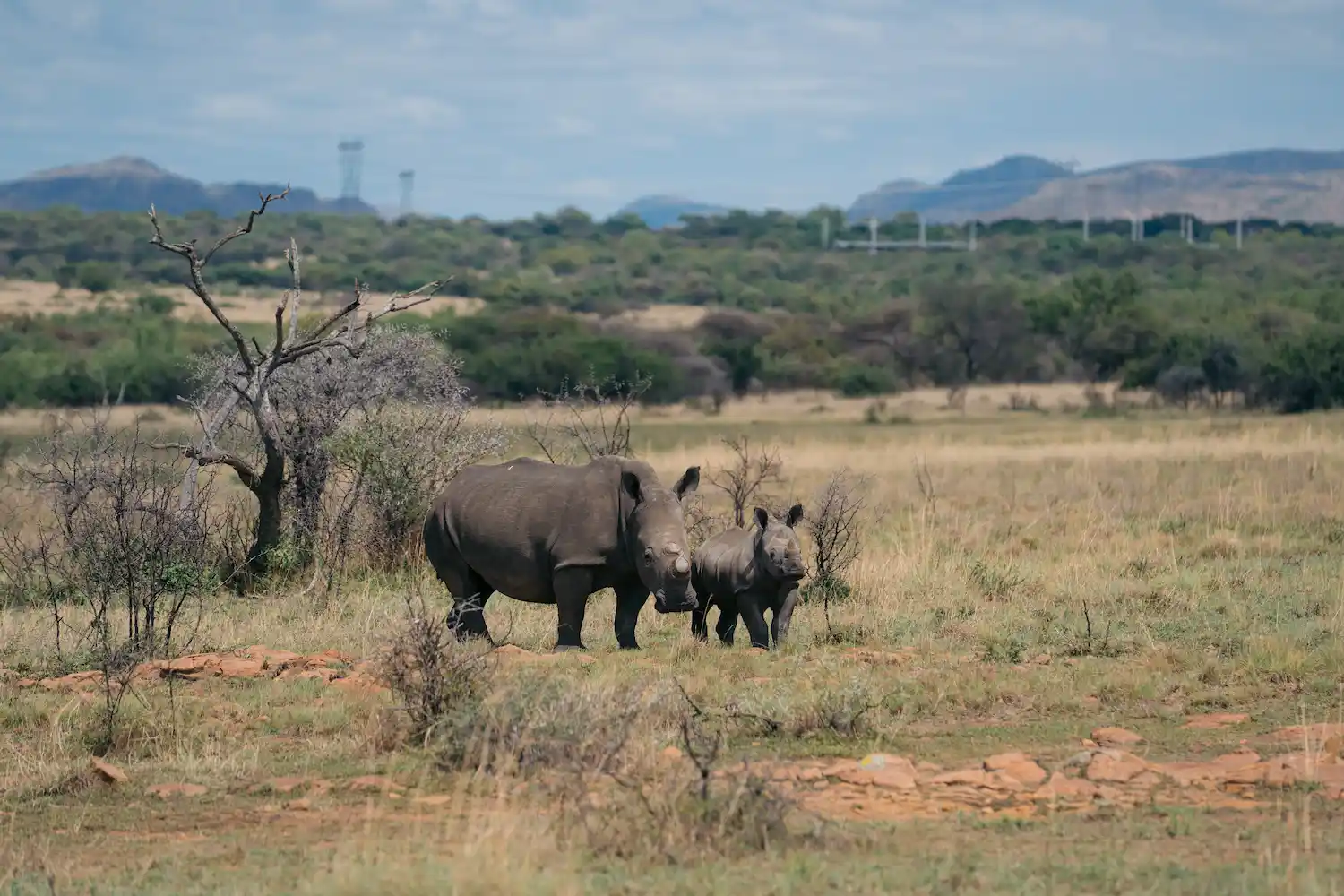
Horn trimming does not eliminate the threat entirely, but it can make rhinos far less attractive targets and has been shown to improve survival rates in high-risk areas.
Understand the Rhino Poaching Crisis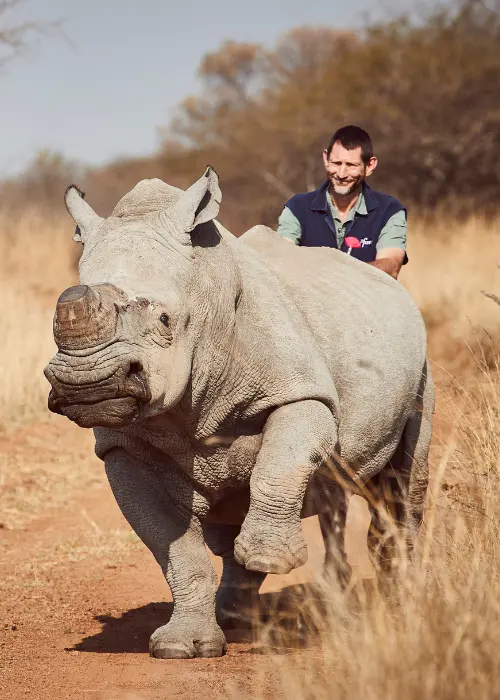
How the Process Works
Safe, Veterinary-Led Intervention
Immobilisation
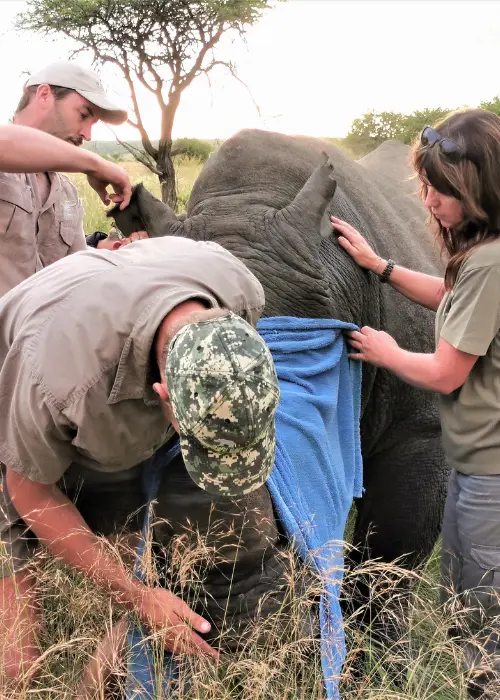
The rhino is safely immobilised under veterinary supervision.
Careful Trimming
The horn is carefully trimmed above the growth plate to avoid sensitive tissue.
Recovery Monitoring
The rhino is closely monitored before returning to the wild.
The procedure is comparable to trimming fingernails or hair, as rhino horn is made of keratin and grows back naturally over time.
Because the horn regrows, trimming must usually be repeated every 12–24 months in areas where poaching pressure remains high.
A Wider Protection Strategy
Never Used in Isolation
Effective rhino conservation requires a layered approach that combines multiple protection measures.
Horn trimming simply removes one of the key incentives that drives poaching. Used alongside other measures, it can significantly increase a rhino’s chance of survival.
See Our Conservation WorkFrequently Asked Questions
Horn Trimming Explained
Can a rhino survive without its horn?
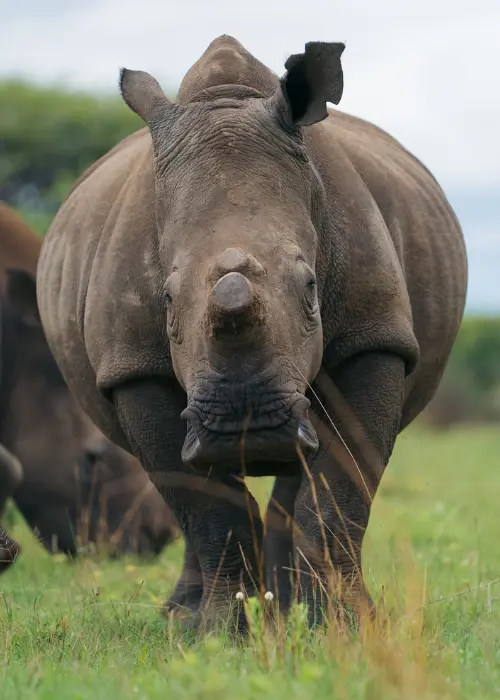
Yes. Rhinos can live perfectly well without their horn. The horn is not attached to bone and is made of keratin, the same material as human fingernails. When trimmed correctly by trained veterinarians, the procedure does not harm the rhino and the horn regrows naturally over time.
Does removing the horn hurt the rhino?
No. The trimming process does not cause pain when performed correctly. The horn is trimmed above the growth plate, which contains the sensitive tissue. The procedure is carried out under veterinary supervision, and rhinos are monitored during recovery before returning to normal activity.
Does dehorning stop poaching completely?
No. Horn trimming reduces the incentive for poachers but does not eliminate the risk entirely. Some poachers may still target dehorned rhinos because a small amount of horn remains. This is why horn trimming must always be combined with other protection measures such as monitoring and anti-poaching patrols.
Does removing the horn affect a rhino’s behaviour?
Studies have shown that rhinos generally adapt well after trimming. Rhinos use their horns for defence, dominance displays and foraging, but in many protected environments these behaviours are not significantly impacted. Conservation teams continue to monitor rhino behaviour and wellbeing as part of ongoing research.
Why not just move rhinos to safer locations?
Translocation is sometimes used in conservation, but it is expensive, complex and not always feasible. Suitable habitat is limited, and moving rhinos can create additional ecological and logistical challenges. In many cases, protecting rhinos where they already live is the most sustainable approach.
Why don’t governments just stop the illegal trade?
International trade in rhino horn has been banned under CITES since 1977. However, illegal markets continue to exist, driven by organised wildlife crime and demand in certain regions. Combating this trade requires international cooperation, law enforcement and long-term demand reduction efforts.
Protecting Rhinos for the Future
Keeping Rhinos Alive Today
Horn trimming is not a perfect solution, but in areas facing intense poaching pressure it can provide rhinos with a critical survival advantage.
For conservation teams working on the front line, the goal is simple: keep rhinos alive today so that future generations have the opportunity to see them thrive in the wild.
By supporting organisations like Endangered Rhino Conservation, individuals can help ensure that these protective measures remain possible.